
A gas stockpile

Have you read John Valiant’s « The Age of Fire « ?
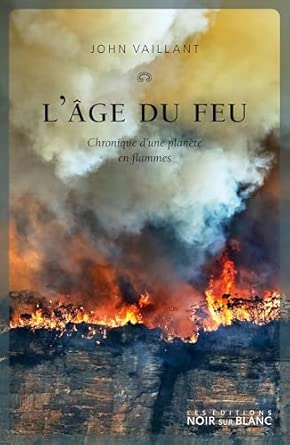
In 2016, an unprecedented mega-fire destroyed most of the city of Fort McMurray in the Canadian state of Alberta. This clear, well-documented, and well-written account keeps the reader on the edge of their seat. Excerpt:
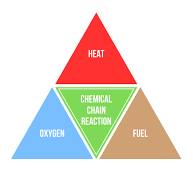
“…Our experience of fire takes place in the realm of the visible, but it is made possible by the invisible, those vaporous kingdoms, hidden from view, where energy abounds. It is not the tree or the house that burns, but the gases they emit. This is what heat is for: to free flammable gases from their solid or liquid prison by transforming them into vapour. In the world of fire, everything that breathes, everything that is volatile, a source of vapour emissions, is of interest; not only the air, but the trees, the neighbuorhood, the house, the Formica countertop, the bag of cat food placed on it, even, if it is warm enough, the cat itself. The higher the temperature, the more varied the menu the fire will have.”1
An out-of-control situation caused by abnormally high temperatures in this subarctic region, and residential neighbourhoods ending in dead ends. This has led to bumper-to-bumper evacuations in streets saturated with houses that burn down in just three to five minutes.
But let’s focus instead on what these few sentences of the quote highlight: « It is not the trees or the houses that burn, but the gases they emit under the effect of heat. For these gases, initially trapped in solid or liquid objects, are highly flammable. » (p. 185). Clearly, the sheer size and rapid spread of the multiple fires surrounding the city were due to the accumulation of flammable materials.
This situation could inspire a transposition to our contemporary societies.
The era of a happy globalisation is over. Power dynamics dominate trade, social relations, and international politics. The relentless attacks on the rule of law favour the strongest… in the short term. But the fragility of societies grows accordingly.
The press and publishing are subject to the rule of the strongest, and at the same time, annual surveys show that freedom of expression and of the press are declining. Never before have so many journalists been imprisoned and executed. These forces suppressing democracy are creating social pressures that resurface under the guise of « minority demands. » The situation is becoming increasingly volatile.
To these flammable societal ills is added the global energy crisis, which damages the lives of people everywhere on the planet more than it promotes the transition to renewable energies. In Russia, Ukraine, and the Persian Gulf states, bombs ignite energy facilities, and civilians pay the price for the flammability of imperial ambitions.
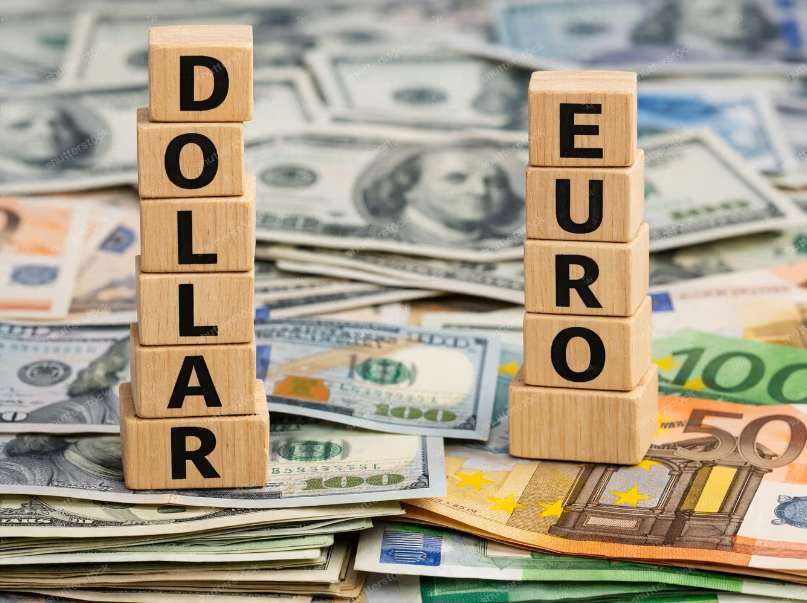
The dollar’s status as the reserve currency is weakening, and experts see no alternative. At a conference at the Economic, Social and Environmental Council, economist Raphaël Gallardo stated: “China is an economic, commercial, and technological powerhouse, but its currency will never be convertible because Chinese banks are virtually insolvent. Japan has too small an economy and persistent protectionist tendencies. Europe is an economic powerhouse but lacks fiscal and military power.” Added to this is the volatility of global markets, which is increasingly impacting household budgets, as the law of the strongest is an aggressive form of mercantilism that exacerbates inequality. This inequality continuously simmers within a highly volatile social order.
Treating screen addiction among teenagers through bans, as well as repressive measures against whistleblowers who speak out against environmental wrongdoing, fails to address either the fact that Europe missed the digital revolution in the last third of the 20th century, or the need for genuine environmental policies. Communities subjected to coastal flooding, displaced by landslides, or affected by soil degradation, harbour simmering resentments for years.
The question is no longer whether these toxic gases will ignite, but when and by what trigger. Among the possible triggers, we think of the very concrete consequences of climate change, the acceleration of social change, and the humiliations produced by the expansion of inequalities.
For our part, we find ourselves within the nebulous network of organisations whose actions aim, locally, to anticipate the effects of the missteps and denials of economic and political decision-makers. Rivalries of egos, as well as those between operational structures and strategies of understatement, not to mention the cognitive dissonance (understandable to a certain extent) that traps decision-makers, all these factors distract minds from the real problems. Should we venture to suggest that decision-makers believe they possess solutions and are content to play the short-term game that benefits them while waiting for the problem to arise?2
In any case, this does not absolve us from anticipating major risks or developing resilience programmes that extend beyond sectoral boundaries. Each flammable gas cannot be reduced to a single, localised danger but rather emanates from a complex system, and all these systems are interconnected. The temporal pressure of ongoing climate change and the simultaneous emergence of other threats together necessitate a comprehensive, locally-based approach.
But the conditions for resilience are obviously not the same from one territory to another. We observe that some territories, for complex reasons related to the composition of their populations and the dynamism of their elected officials, possess a social capital that makes them learning, inventive communities where the risks of unrest are mitigated and resilience is already underway. Other territories, for reasons that remain to be analysed, do not benefit from such driving social capital and stagnate in a kind of passive adherence to higher authorities in the face of global dangers.
The major global issues outlined above have significant repercussions even in rural areas far removed from centres of power. Therefore, understanding one’s wider neighbourhood allows for the development of local social capital. This facilitates the mobilisation of elected officials and community leaders to take action. May the newly elected local governments immediately begin resilience-building processes and strengthen previously launched initiatives.

Otherwise, the status quo is a danger that grows daily. The continued presence of residents, entrepreneurs, and elected officials in a socioeconomic system dating back to the 18th century is crashing against the wall of AI, autonomous factories and chatbots. The status quo is crashing even more violently against the wall of climate change because it stifles the capacity for flexibility and agility when living conditions change. Habits, fear of change, and the lure of short-term gain obstruct the ability to stay in touch with the evolution of intangible realities. This process weakens institutions of all kinds and citizens in general.
In conclusion,
Whether we welcome it or fear it, climate change and widespread digitalisation are sparing no sector of economic activity. Particularly in the Combrailles region, industry and agriculture will struggle to remain dominant. This situation must be examined rather than ignored. Certainly, the debates will be heated, but the search for a suitable socio-economic framework does not negate the fact that the living or barren structure of the soil will ultimately govern. Otherwise, what will be the consequences of maintaining the status quo?
We hope that the new local administration will bring together local elected officials, staff and civil society to move beyond a degraded mode of operation and thus aggregate skills to face the new climate of the biosphere and adapt the territory to the environment it provides us.
1John Vaillant, The Age of Fire, Chronicle of a Planet in Flames , Noir sur Blanc Publishing, Lausanne, 2023, p. 84
2Allusion to Nassim Nicholas Taleb, *The Black Swan*, *The Power of the Unpredictable*, Paris, Les Belles Lettres, 2022, p. 226